Search this Blog & the WWW

Pages

Showing posts with label Military. Show all posts

Monday, January 11, 2016

UK Trip December 2015 - Part 05 - Visiting the Imperial War Museum in London

Continuation from:

UK Trip December 2015 - Part 04 - Walking along the Thames river and Tower Bridge

After Tower Bridge we went back to a Tube station and headed towards Lambert North Tube station. From there we headed towards the Imperial War Museum on Lambeth Road, London SE1 6H. 

While walking towards the museum we happen to stumble upon the house of William Bligh, the Commander of the 'Bounty' (1754 - 1817). Wow, a house that is more than 200 years old. Looks just like any typical house in London.


The museum is situated next to a park. We went through the park and I saw this giant sundial. Unfortunately, it was a downcast day and we can't see any shadows.


The first thing that greeted us at the entrance of the museum was a pair of 16 inch naval guns. Massive.


The front of the museum.


The shell is more than a tonne in weight.


The breach of the massive guns.


The entrance of the museum. The museum is housed in part of the former Bethlem Hospital (Bedlam), built in 1811 and relocated in 1930, with the museum arriving from South Kensington in 1936.


The main hall of the museum has a number of major exhibits like old WW2 aircraft and modern jets like the Harrier Jump Jet pictured below.


There is also the famous Spitfire as well as the V1 and V2 weapons from Nazi Germany.


I particularly like the WW1 exhibition. Here is an advert asking people to invest in War Bonds.


A T34 tank.


A German 88 mm anti-aircraft cannon.


The German sidecar recon BMW bike.


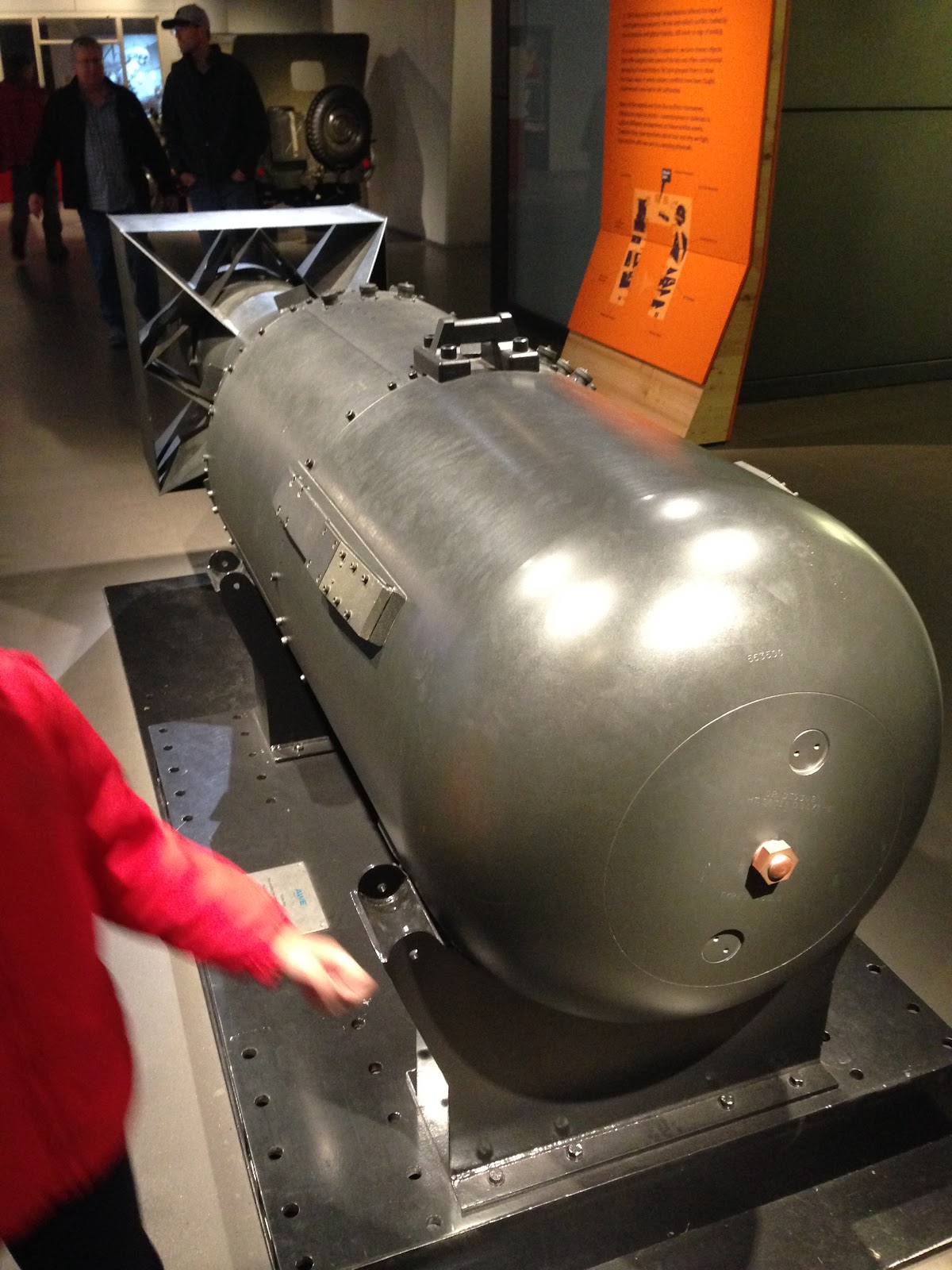
A replica of the bomb that destroyed Hiroshima.


The Supermarine Spitfire.


The highest floor of the museum.


Selfie.


Had a wonderful time at the museum, the kids enjoyed it.

 To be continued.

Thursday, September 4, 2014

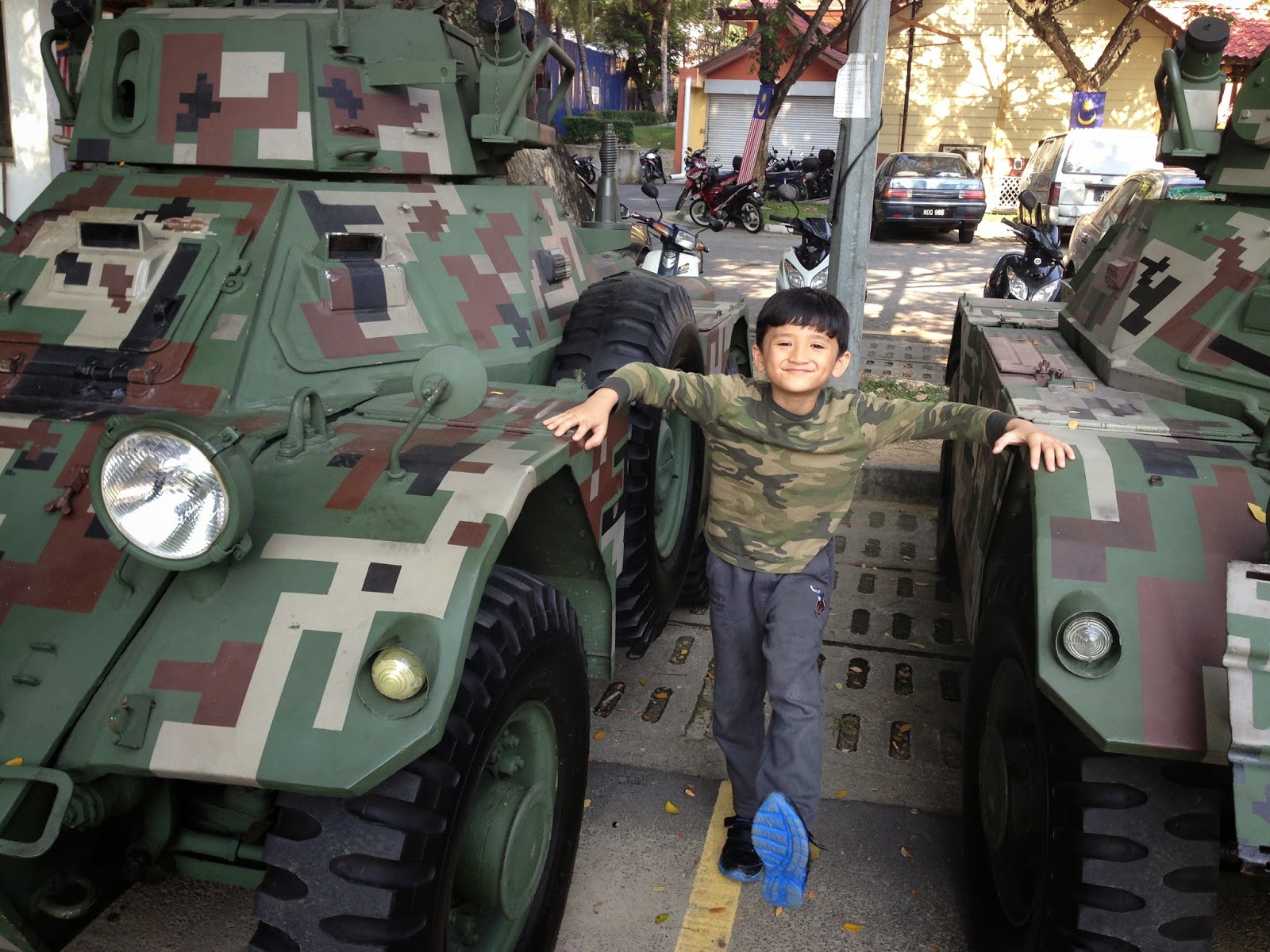
Posing with Malaysia's military hardware at the National Museum parking area

A day before Merdeka, I went with my family to the parking lot of National Museum to see all the Malaysian military vehicles that will be used for the national day parade.

Below is an old Scorpion tank.


Number 1 & 3.


Cool pose.


A 25-pounder howitzer.


An armored personnel carrier.


More modern APCs.


Very vintage Ferret scout car.


A PT-91M main battle tank.


I didn't imagine it to be that small.


Ferret scout car.


Assault bridge-laying system.


Back of the PT-91M tank.


My son making the military pose.


Armored recovery vehicle.


A multi-terrain vehicle.


Front end of the of the armored recovery vehicle.


Armored recovery vehicle of a different model.


Newer wheeled APCs.


Note the smoke launchers.


Salute three.


Salute one.


A selfie.


Hisdustan movie pose.

Thursday, March 14, 2013

Salute to Malaysia's Arm Forces

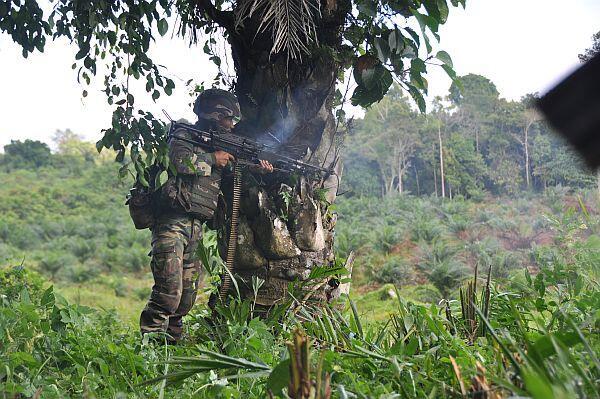
My heartfelt thanks and appreciation to members of the Malaysian Arm Forces currently engaged in a deadly battle with Sulu terrorist in Sabah. Be proud, be brave, be resolute. We are with you in prayers and in spirit!

Below is a picture of a long-range sniper team (gunner and spotter) training their sights on the enemy position. Pleased to note that the weapon of choice is the 0.5 inch Barret Sniper rifle.


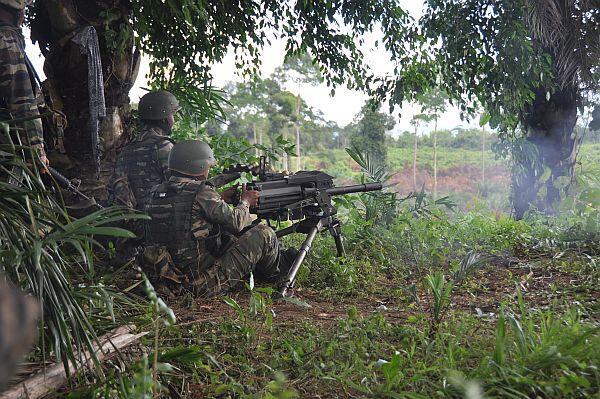
5.56mm GPMG FNFL (?)


AGS19 40mm grenade launcher.


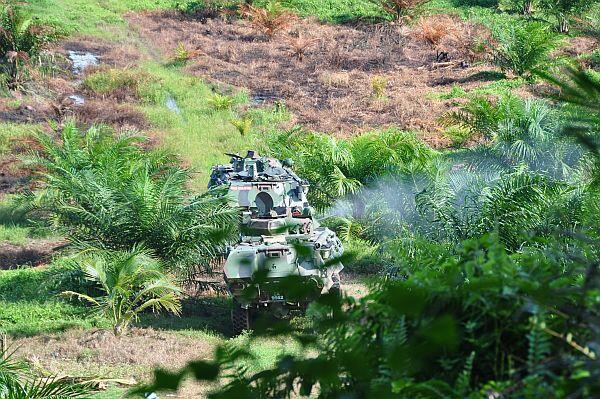
Condor APC with 20mm Bushmaster cannon.


Pictures sourced from the Malaysian Department of Defence.


Friday, July 15, 2011

Pentagon admits suffering major cyber attack in March

The Pentagon has admitted it suffered a major cyber attack in which thousands of files were taken by foreign hackers.

The deputy defence secretary said future cyber attacks could even cause deaths

Deputy Defence Secretary William Lynn said that in a March attack and other breaches, hackers had taken information on "our most sensitive systems".


The admission came as the Pentagon rolled out a strategy for strengthening US cyber capabilities and addressing threats and attacks in cyberspace.

See original article at =>
http://www.bbc.co.uk/news/world-us-canada-14157975

Tuesday, March 1, 2011

Me 163 Komet (Video & feature)

The explosive (literally and figuratively) Me 163 was the first fighter to incorporate swept wings.


This is a short clip of the ME 163 Komet, the world's first operational rocket fighter plane as flown by Germany in WW2.

The Me 163 Komet was perhaps the most unique aircraft design of the Second World War. German scientists, always on the cutting edge of evolving war technology, developed a rocket-powered aircraft based on testing completed with an engine-less glider design. The resulting research produced the one-man, swept back fighter that was equally dangerous to pilot and Allied bomber formations alike.
The Me 163 was originally a product of Dr. Alexander Lippisch from 1939, who pioneered a great deal of information through research of glider designs (in the form of the DFS 193 glider). With the base Walter rocket motor in place, and a volatile but explosive combination of two substances known simply as T-Stoff and Z-Stoff, the aircraft could utilized the chemical reactive explosion in a controlled environment to propel their new aircraft airframe.

The diminutive Me 163 was piloted by a single crewman and featured swept-back wings (a major wartime development in itself) and a single rudder plane at rear. The Me 163 would take off through the use of a dolly which was jettisoned upon take-off, fly to the required attack altitude and swoop down onto oncoming and unsuspecting bomber formations. Landing was accomplished by utilization of a single centerline skid, to which added even more lethality to the pilot himself upon landings.

In theory, the idea of this small one-man aircraft tearing holes into bombers was sound as no Allied aircraft could remotely catch the 623 miles per hour Komet. In reality, an array of dangers faced the Komet pilot. The fuel mixture itself was known to self-combust as both elements were highly volatile, destroying the aircraft and killing the test pilot. The airframe could also become uncontrollable at extreme speeds (changes incurred later in the design process would iron some of this issue out). In regards to the 7.5 minutes of flightime that the fuel mixture afforded the pilot, the Me163 was to then glide in a controlled freefall back to base. As such, range of the Me163 was extremely limited as was the onboard ammunition as 60 rounds per cannon.

Initial combat of the Me 163 found that the aircraft approached a flight of B-17 Flying Formations too fast, thus not allowing the Me 163 pilots a chance to properly aim their guns and consequently overshooting the target. It was then discovered that the Me 163 could be used more effectively by conducting a steep climb upon takeoff and achieving a desired attack altitude until the motor fuel ran dry. From there, Me 163's could conduct a more controlled approach through two or three dives at the bomber formations, utilizing gravity and drag in the process. Ultimately, the system could then settle down to rest at a home base. Landing provided it's own share of danger as this was the greatest window of vulnerability for the Me 163 system. Without fuel or much momentum, the aircraft became a sitting duck to Allied fighters in the area. As mentioned above, landing was accomplished through a spring-loaded skid running centerline on the fuselage.

Me 163 Komets were credited with destroying just 9 B-17 Flying Fortresses throughout the war, with about 300 Me 163s produced. The Empire of Japan tried unsuccessfully to procure the design from Germany when one of two subs transferring the Me 163 plans was sunk by Allied ships. The Japanese did, in fact, develop their own working variant of the Me 163 with the surviving set of plans but the aircraft never went into operational service.

Friday, April 23, 2010

RPO-M / RPO PDM-A "Shmel-M" thermobaric grenade launcher / rocket-propelled flame-thrower (Russia)

RPO-M thermobaric grenade launcher / rocket-propelled flame-thrower, complete weapon (top) and FAE rocket (bottom)

Caliber: 90 mm
Type: rocket
Overall length: 940 mm
Weight: 8.8 kg complete
Effective range: up to 300 m (1700 m maximum)

The RPO-M rocket-propelled flame-thrower is a recent development by the KBP Instrument Design Bureau, and is an improved version of the well-known RPO-A weapon, which was developed by same organization. RPO-M, also known as RPO PDM-A "Shmel-M", is adopted by Russian army and offered for export. It is significantly lighter than RPO-A, has better ergonomics and improved ballistics and terminal effect. It is also more accurate, thanks to the optical sight, integrated into the re-usable fire control unit.

The RPO-M consists of a disposable launching tube / barrel, pre-loaded at the factory with rocket, and a reusable firing control unit, which is attached to the launching tube before use. Once the rocket is fired, empty launcher tube is detached from firing control unit and discarded. The launcher tube is made from fiberglass, with protective rubber covers at both ends. Covers are destroyed automatically when rocket is fired. The firing control unit is made mostly from plastic, and consists of a pistol grip, electronic trigger (ignition electrical impulse is generated by the pull of the trigger) and manual safety mechanisms, and short forend. On the left side of the firing control module there's a folding base that hosts an optical sight, and an additional rail for attachment of an IR / Night sighting equipment. The rocket consists of an solid-propellant engine, folding tail fins and a large thermobaric warhead, loaded with Fuel-Air Explosive. The blast effect of the RPO-M warhead is said to be comparable with that of the 155mm / 6" HE artillery shell.

LinkWithin

Related Posts with Thumbnails